On this page18 sections
- What Is the Purpose of an LMS?
- Why Do Organizations Use an LMS?
- What Are the Main Purposes of an LMS?
- 1. Creating and Managing Online Courses
- 2. Delivering Learning Content Efficiently
- 3. Managing Learners and User Access
- 4. Tracking Learning Progress
- 5. Improving Learning Decisions Through Data
- What Is the Purpose of an LMS in Education?
- What Is the Purpose of an LMS for Course Creators?
- What Is the Purpose of an LMS for Businesses?
- How Does an LMS Improve the Learning Experience?
- LMS Purpose vs Traditional Learning Management
- What Features Support the Purpose of an LMS?
- What Are the Limitations of an LMS?
- How to Choose an LMS Based on Your Purpose
- How Edushade Supports Better Learning Management
- Build Smarter Learning Experiences With an LMS
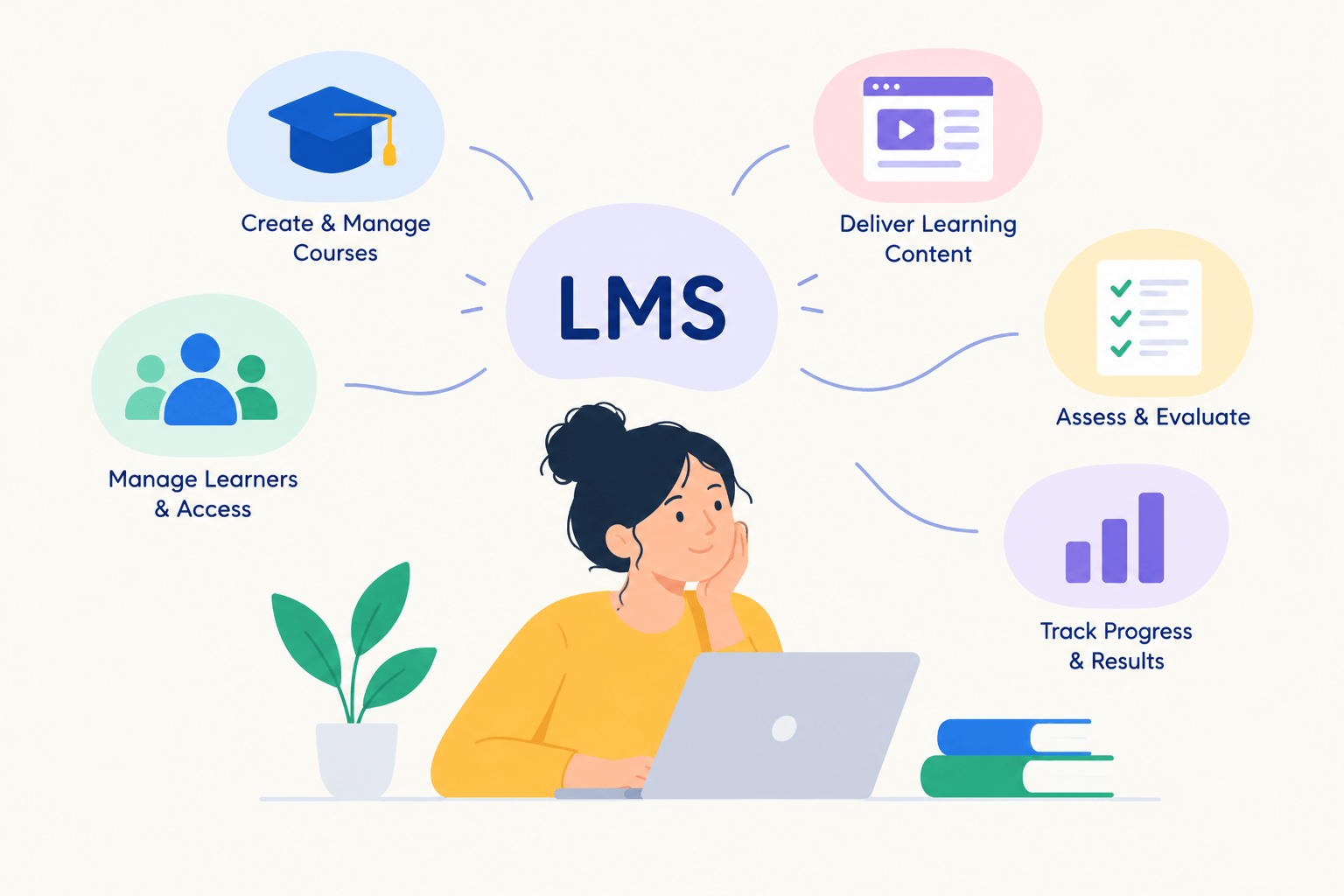
The purpose of an LMS (learning management system) is to make learning easier to create, deliver, manage and track. An LMS gives educators, course creators, schools, universities, and businesses one central place to organize courses, support learners, measure progress, and improve the overall learning experience.
What Is the Purpose of an LMS?
The main purpose of an LMS is to provide a structured digital environment where learning can be created, delivered, managed, and measured. It connects instructors, learners, course materials, assessments, and progress data in one platform.
A learning management system helps solve a common challenge: managing learning becomes harder as the number of courses, learners and training requirements increases.
For example, a tutor teaching 20 students may manage lessons manually at first. However, as the number of students grows, organizing resources, tracking assignments, and monitoring progress becomes more difficult. An LMS creates a system that makes these tasks easier to handle.
According to SAP, a learning management system is software used for planning, delivering, and tracking educational or training programs.
Why Do Organizations Use an LMS?
Organizations use an LMS because it helps them manage learning more efficiently. Instead of depending on separate tools for content sharing, assessments, communication, and reporting, an LMS brings these activities together.
The purpose of an LMS is not only to store courses. It supports the complete learning process:
- Creating educational content
- Delivering lessons
- Managing learners
- Tracking progress
- Assessing performance
- Improving future courses
Schools, universities, online educators, coaching businesses, and companies use LMS platforms because they need a reliable way to organize learning at scale.
What Are the Main Purposes of an LMS?
A learning management system has several important purposes depending on who uses it. The needs of a university may differ from those of a course creator, but the core goals remain similar.
1. Creating and Managing Online Courses
One major purpose of an LMS is helping instructors create and organize courses. Educators can upload lessons, arrange modules, add assessments and build structured learning paths.
For example, an online language tutor can create separate courses for beginner, intermediate and advanced learners. Each course can include videos, practice activities, quizzes, and downloadable resources.
Without an LMS, managing these materials across emails, cloud storage, and messaging apps can become difficult.
2. Delivering Learning Content Efficiently
An LMS provides a central location where learners can access educational content. Students do not need to search through multiple platforms to find lessons, assignments, or resources.
A well-organized LMS allows learners to:
- View available courses
- Complete lessons in order
- Access learning materials
- Submit assignments
- Receive feedback
This creates a smoother experience for both instructors and learners — which is the whole argument for a dedicated student panel.
3. Managing Learners and User Access
Another purpose of an LMS is managing different types of users. Most LMS platforms support multiple roles, including:
| User Type | Main Responsibility |
|---|---|
| Administrator | Manages users, settings, and platform structure |
| Instructor | Creates courses and supports learners |
| Learner | Completes lessons and activities |
For example, a university may have administrators managing thousands of accounts through user management and role permissions, while instructors focus on teaching their own courses.
4. Tracking Learning Progress
An important purpose of an LMS is tracking what learners complete and how they perform.
An LMS can record information such as:
- Lesson completion
- Quiz results
- Assignment submissions
- Course progress
- Training completion
This progress information helps teachers identify learners who may need additional support, and helps businesses confirm that employees have completed required training.
5. Improving Learning Decisions Through Data
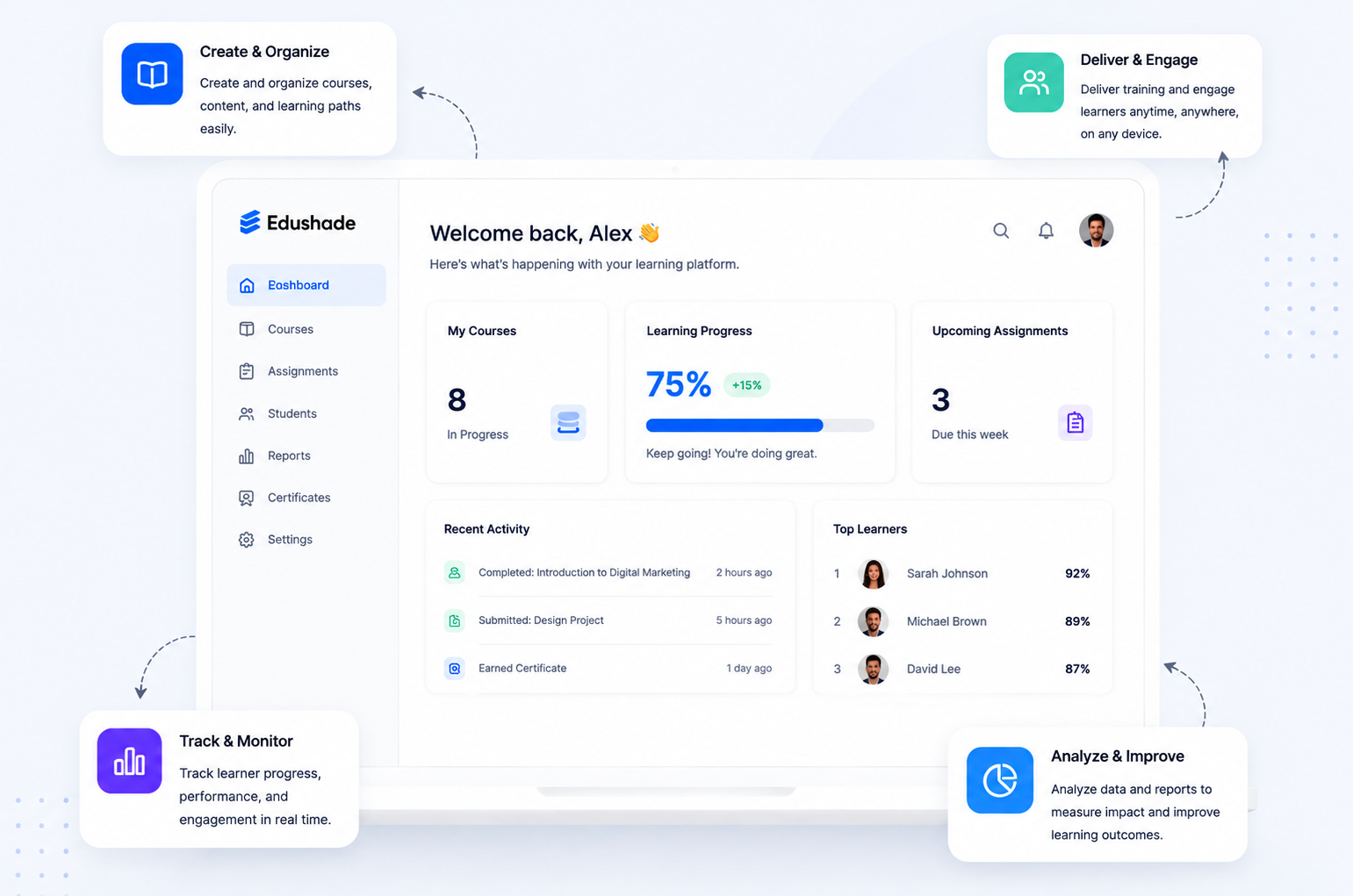
A learning management system can provide reports and analytics that help organizations understand learning activity.
For example:
- A teacher can see which lessons students struggle with.
- A course creator can identify where learners stop progressing.
- A training manager can review completion rates.
What Is the Purpose of an LMS in Education?
The purpose of an LMS in education is to support teachers and students by creating a connected digital learning environment.
Schools and universities use LMS platforms to:
- Share course materials
- Manage assignments
- Support online classes
- Communicate with students
- Track academic activities
An LMS can support traditional classroom teaching, blended learning, and fully online education. It does not replace teachers; it gives them additional tools to organize and improve learning.
What Is the Purpose of an LMS for Course Creators?
For course creators, the purpose of an LMS is to turn knowledge into organized learning programs. Instead of sending videos, documents, and instructions separately, creators can build complete courses inside one platform.
A coach, consultant, or educator can use an LMS to:
- Create structured lessons
- Organize course modules
- Manage learners
- Provide assessments
- Monitor engagement
For educators and training businesses exploring digital learning, Edushade documents each of these workflows on its features pages.
What Is the Purpose of an LMS for Businesses?
Businesses use LMS platforms primarily for employee training, onboarding, professional development, and knowledge sharing.
The purpose of an LMS in business is to make training more organized and measurable. Companies can create training programs, assign courses to employees, and monitor completion.
Common business uses include:
- New employee onboarding
- Product training
- Compliance learning
- Skill development
- Customer education
An LMS is especially useful when organizations need to deliver the same training experience to many people.
How Does an LMS Improve the Learning Experience?
The purpose of an LMS goes beyond administration. A well-designed platform can improve how learners interact with educational content.
An LMS can improve learning by providing:
Clear Learning Structure
Learners know what to study, where to find resources, and what steps to complete next.
Flexible Access
Learners can often access course materials according to their own schedules, making learning more adaptable.
Better Feedback
Assessments and instructor feedback help learners understand their progress.
Continuous Improvement
Learning data helps instructors update courses and improve future learning experiences.
LMS Purpose vs Traditional Learning Management
Understanding the purpose of an LMS becomes easier when comparing it with traditional methods.
| Traditional Learning Management | LMS-Based Learning Management |
|---|---|
| Paper records and spreadsheets | Digital learner records |
| Manual resource sharing | Centralized course materials |
| Limited progress visibility | Automated tracking |
| Physical assessments | Online assessments |
| Difficult large-scale management | Easier learner management |
Traditional teaching methods remain valuable, but an LMS helps organizations manage modern learning demands more efficiently.
What Features Support the Purpose of an LMS?
The purpose of an LMS is achieved through different features that support teaching and learning.
Important LMS features include:
Course Creation Tools
These allow instructors to create lessons, organize modules, and upload learning resources.
Assessment Features
Quizzes, tests, and assignments help measure learner understanding.
Reporting Tools
Analytics provide insights into learner activity and course performance.
Communication Features
Discussion tools and announcements help maintain interaction between instructors and learners.
User Management
User controls help organizations manage access and organize different learner groups.
The best LMS features depend on the organization’s goals, audience, and learning model.
What Are the Limitations of an LMS?
Although an LMS provides many benefits, organizations should understand its limitations.
An LMS cannot automatically create effective learning. It requires:
- Good course design
- Updated learning materials
- Instructor involvement
- Learner engagement strategies
A platform can support education, but successful learning depends on how the technology is used.
How to Choose an LMS Based on Your Purpose
The right LMS depends on what you want to achieve.
Before choosing an LMS platform, consider:
✓ Who are your learners? ✓ Are you creating courses, training employees, or supporting students? ✓ What content formats do you need? ✓ Do you need assessments and reports? ✓ How many users will access the platform? ✓ Can the system support future growth?
For a small tutor, simplicity may be the priority. For a university or training company, scalability and reporting may matter more.
How Edushade Supports Better Learning Management
Understanding the purpose of an LMS is the first step toward choosing the right learning solution. The right platform should help educators organize knowledge, support learners, and create a smoother teaching workflow.
For tutors, academies, schools, and training businesses, an LMS can provide the structure needed to deliver professional learning experiences.
If you want the wider argument rather than the definition, read why a learning management system matters, or compare what Edushade documents against your own requirements.
Build Smarter Learning Experiences With an LMS
The purpose of an LMS is to make learning more organized, accessible, and measurable. By bringing courses, learners, instructors, and learning data together, an LMS helps organizations create better educational and training experiences.
The next step is to identify your learning goals and choose a platform that matches your needs.