
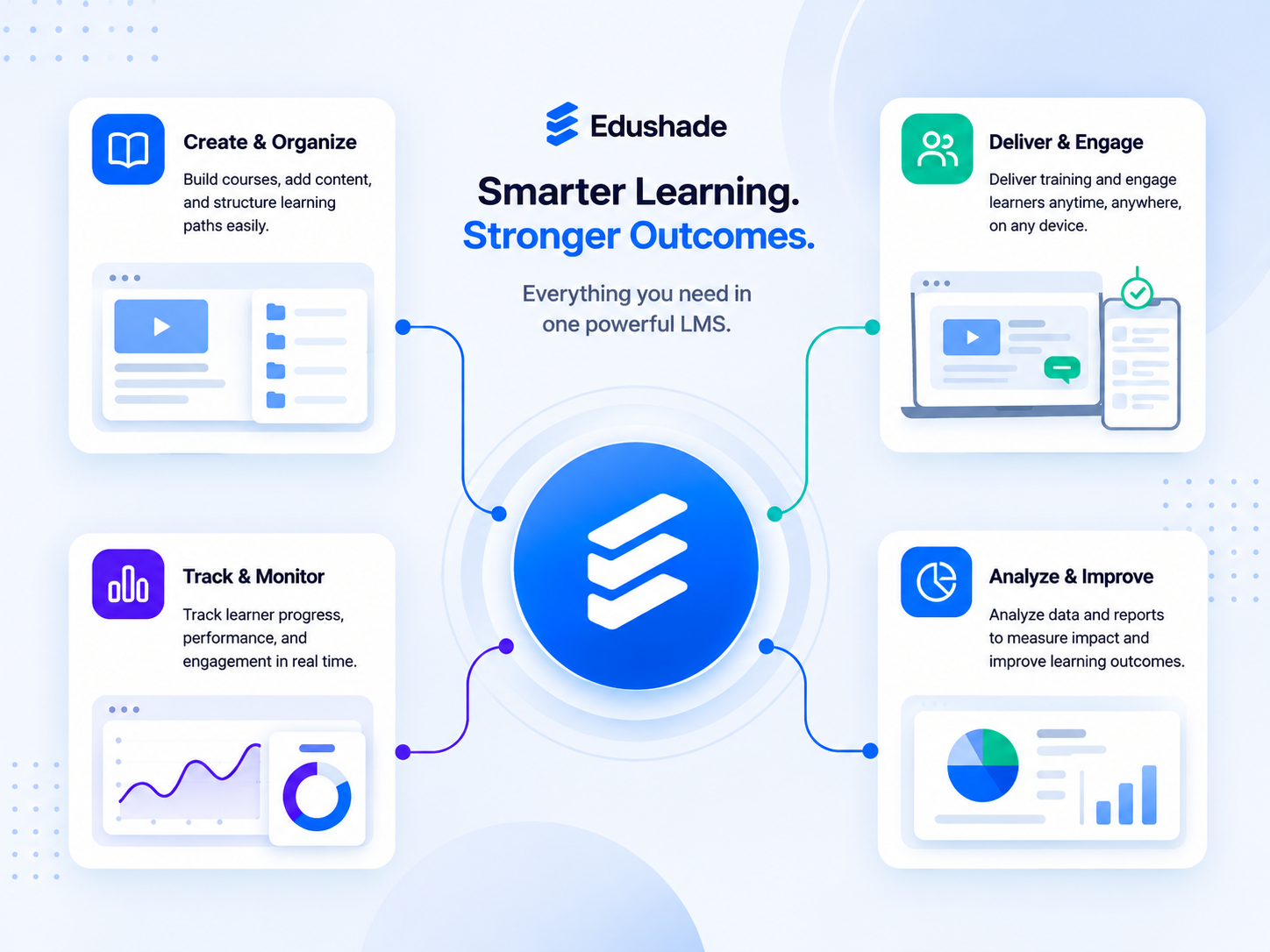
A learning management system helps organizations create, deliver, manage, and track learning from one platform. The main advantages of a learning management system include centralized course management, automated tasks, learner progress tracking, flexible access, improved engagement, and scalable training for schools, universities, businesses, tutors, and course creators.
What Is a Learning Management System?
A learning management system (LMS) is software that allows organizations to create, organize, deliver, and monitor learning activities online.
An LMS brings courses, learning materials, instructors, learners, assessments, and performance data together in one system. Instead of managing training through separate documents, emails, and spreadsheets, organizations can use one platform to manage the complete learning process.
Learning management systems are used in many areas, including:
- Schools and universities for digital classrooms
- Businesses for employee training
- Training companies for professional development
- Tutors and coaches for online courses
Popular LMS platforms include Moodle, Canvas LMS, Blackboard, and other education technology solutions designed for different learning needs.
What Are the Main Advantages of a Learning Management System?
The main advantages of a learning management system are better organization, easier administration, improved accessibility, stronger reporting, personalized learning, and more efficient training delivery.
An LMS helps organizations move from manual learning management to a structured digital workflow. It gives instructors and administrators better control over content, users, and learning outcomes.
The value of an LMS depends on how well the platform matches the organization's goals. A school, a corporate training team, and an online course creator may require different LMS features.
Centralized Learning Management and Better Course Organization
A major benefit of an LMS is that it stores learning content and user information in one organized platform.
Without an LMS, educators and trainers often manage course files, learner records, assignments, and communication through multiple tools. This creates extra work and makes tracking progress more difficult.
With a learning management system, organizations can:
- Organize courses and lessons
- Store educational resources
- Manage learner access
- Update content from one location
- Maintain consistent learning structures
For schools, universities, and training providers, centralized management creates a smoother experience for both instructors and learners.
Improved Accessibility and Flexible Learning
One of the biggest advantages of LMS software is flexible access to learning materials.
An LMS allows learners to access courses, videos, documents, assignments, and assessments from different locations and devices.
This supports:
- Online learning
- Remote training
- Self-paced education
- Blended learning programs
For example, a professional training company can deliver the same course to learners in different regions without requiring everyone to attend a physical session.
Automated Learning and Administrative Tasks
How does an LMS save time for educators and organizations? It reduces repetitive administrative work through automation.
A learning management system helps manage tasks such as:
- User enrollment
- Course assignments
- Notifications
- Completion tracking
- Training reports
Automation allows teachers, trainers, and administrators to spend less time managing routine processes and more time improving learning content.
For businesses, LMS automation is useful for employee onboarding, compliance training, and professional development programs.
Better Learner Tracking and Learning Analytics
A key advantage of a learning management system is the ability to monitor learner activity and performance.
LMS analytics provide insights into:
- Course completion
- Assessment results
- Learner participation
- Training progress
These insights help educators identify learning challenges and improve course materials.
For example, if many learners struggle with a particular lesson or assessment, instructors can review the content and make improvements based on learner performance data.
Personalized Learning Experiences
A learning management system supports personalized learning by allowing organizations to create different learning paths for different users.
Personalized learning helps match training content with learner goals, roles, and skill levels.
Organizations use LMS platforms to provide:
- Role-based courses
- Skill development paths
- Progress-based learning
- Recommended resources
This is especially useful for businesses training employees with different responsibilities and for educators supporting learners with different learning needs.
Benefits of LMS for Schools and Universities
Why is LMS important in education? Schools and universities use learning management systems to support digital classrooms, organize academic resources, and improve communication between teachers and students.
The benefits of LMS for education include:
- Easier course management
- Online assignment submission
- Digital assessments
- Student progress tracking
- Centralized learning materials
Academic institutions should evaluate LMS platforms based on usability, accessibility, integration options, and support for teachers and students.
Organizations such as UNESCO and EDUCAUSE provide research and resources related to digital learning and education technology. Institutions should use trusted sources when evaluating education technology decisions.
Benefits of LMS for Businesses and Employee Training
What are the advantages of LMS for businesses? Companies use LMS platforms to manage employee training, onboarding, compliance education, and professional development.
A corporate LMS helps organizations:
- Deliver consistent training programs
- Track employee learning progress
- Manage certifications
- Support workforce development
- Analyze training activity
For companies with distributed teams, an LMS provides a structured way to deliver training across departments and locations.
Benefits of LMS for Course Creators, Tutors, and Coaches
How does an LMS help online course creators? A learning management system gives educators and coaches tools to organize courses, manage learners, and deliver digital education.
Course creators benefit from:
- Organized course libraries
- Learner progress tracking
- Assessment management
- Structured lesson delivery
Tutors and coaches who build online education businesses often use LMS platforms to create a consistent learning experience for their students.
Edushade supports organizations exploring digital learning workflows by providing technology solutions for structured online education. Explore Edushade's learning platform resources to understand how LMS technology supports educators, training providers, and digital learning businesses.
Cost and Time Efficiency of Using an LMS
Can an LMS reduce learning management costs? In many cases, organizations save time by reducing manual processes and improving content management.
An LMS may help reduce operational effort through:
- Digital course delivery
- Reusable learning materials
- Automated reporting
- Easier course updates
However, organizations should consider costs related to software, implementation, content creation, maintenance, and user training before selecting an LMS.
LMS Advantages and Disadvantages
A learning management system provides many benefits, but organizations should also understand possible limitations.
| Advantages | Limitations |
|---|---|
| Centralized learning management | Requires planning and setup |
| Automated workflows | Users may need training |
| Better reporting | Software costs vary |
| Flexible learning access | Quality content requires effort |
| Scalable course delivery | Technical requirements differ |
Understanding both advantages and disadvantages of LMS platforms helps organizations make better decisions.
How to Choose the Right Learning Management System
Choosing the right LMS starts with understanding your learners, goals, and workflow.
Identify Your Learners
Ask:
- Are you training students, employees, customers, or members?
- Do learners need self-paced or instructor-led training?
- How many users will access the platform?
Your audience determines the features you need.
Compare Important LMS Features
Key LMS features include:
- Course creation tools
- Assessment systems
- Analytics and reporting
- Certificates
- Mobile accessibility
- User management
- Integrations
Evaluate User Experience
A good LMS should be simple for administrators, instructors, and learners. Complex systems may reduce adoption and increase training requirements.
Consider Future Growth
Choose a platform that supports future needs, including more users, additional courses, new instructors, and expanded reporting requirements.
Why Organizations Invest in Learning Management Systems
Organizations choose LMS platforms because they need a more organized way to deliver and manage learning.
The strongest LMS benefits come from combining structured content, automation, learner insights, and flexible access.
The right LMS does not replace teaching or training. It supports educators and organizations by making learning easier to manage, measure, and improve.
Before choosing an LMS, review your learning goals, required features, and user needs. Explore Edushade's LMS solutions to see how a structured learning platform can support your education or training workflow.